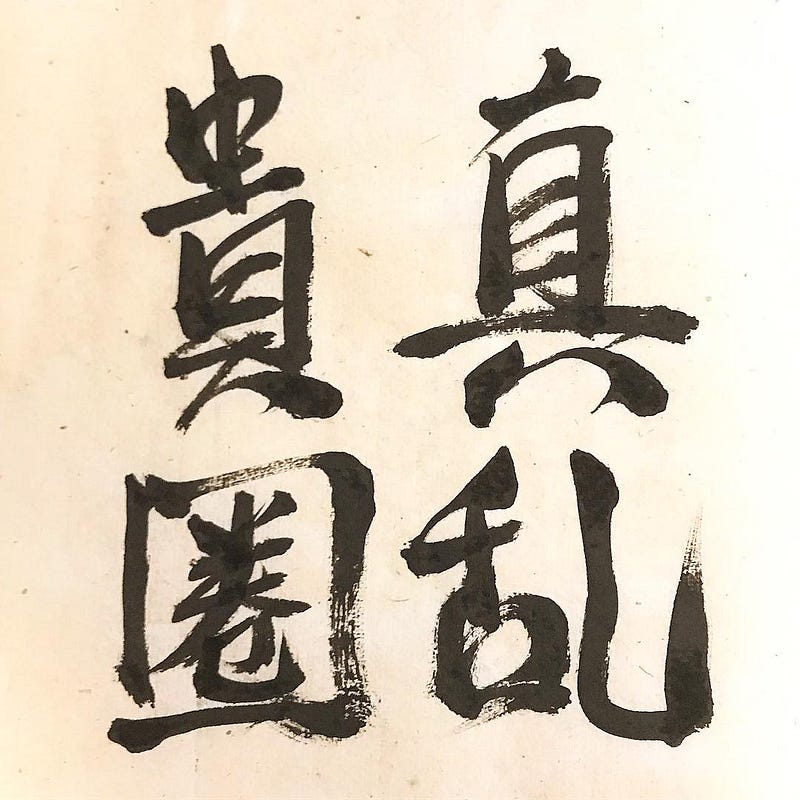
We’ve all heard someone say: “Your circle is a real mess.”
It’s not just the startup scene — whether it’s the crypto circle, the e-commerce circle, the investment circle, the incubator circle, or any other niche community, there are always “scammers” and “middlemen” lurking about. Over nearly two and a half years of entrepreneurship, I’ve encountered countless scammers and middlemen, suffered quite a few losses because of them, and that’s precisely why I hold such contempt for these types of people.
Before we begin, let’s define the characteristics and differences between “scammers” and “middlemen”:
“Scammers”: People who claim to have many resources, demand various forms of “payment” from startups to profit themselves, yet never deliver on their promises. “Middlemen”: People who require startups to pay various forms of “payment” in exchange for their resources, and who are notorious for “overcharging.”
Setting scammers aside, “middlemen” has always been a controversial term. In society, I believe all human interactions are essentially “value exchanges.” Put plainly, nobody is obligated to help anyone for free.

My position is: when you hold a valuable resource, I fully support you charging a fair fee to those who want access to it. However, over the years I’ve encountered plenty of people who claim to “help make introductions,” only to provide contact information that’s freely available online. Or they claim to “pull strings for you,” when in reality they barely know the other party, yet they demand startups pay exorbitant “referral fees,” “brokerage fees,” or equity in exchange.
People who grossly inflate their own value or demand excessive payment — in this article we’ll collectively call them “middlemen.” Essentially, these scammers and middlemen in the ecosystem are dragging startup teams down and wasting everyone’s time.

After being burned by countless scammers and middlemen, I gradually came to understand these people’s patterns and became better at distinguishing who’s a “scammer” versus a “middleman.” Out of my disdain and contempt for them, I wrote this article.
Similar to the cult checklist proposed by Germany’s Saxony State Ministry of Culture, I’ve divided interactions with these parasites into three phases: Before the Meeting, During the Meeting, and When They Make Their Move. For each phase, I’ve identified ten checkpoints, with brief explanations for reference. If the person’s behavior matches more than five of these points, there’s a very high chance they’re a scammer or middleman. I hope this helps newcomers to the startup scene identify them early.

To avoid encountering scammers and middlemen, you can try doing your research before the person invites you to meet:
-
People who’ve been in this circle longer than you have a reserved attitude toward this person — or have never even heard of them. (This community is tiny. How is it possible that people who’ve been around longer than you haven’t heard of this person?)
-
Other than on social media, you can barely find any information about this person. (Scammers and middlemen love to exaggerate their accomplishments, and social media is the perfect platform for that.)
-
This person’s social media profiles are loaded with outrageously inflated titles. (Seven or eight chairmanships, senior shareholder, founding partner — how many important positions can one person actually hold?)
-
They bear a title from an organization that sounds like a well-known institution, but you can’t find any information about that association, organization, or company. (Take an organization everyone’s heard of, add “Taiwan” or “Youth” as a prefix, and suddenly it transforms into something that sounds prestigious but has zero actual information — an empty-shell organization.)
-
This person’s social media feed is filled with photos from various events, but never explains what they actually did there. (Being invited to major events is understandable, but what’s the purpose of every organization inviting you to attend their ceremony?)
-
This person shares anecdotes about interactions with public figures, but never actually tags them. (“Mr. Guo told me…” or “Last time I ran into President Tsai…” — so why haven’t you added them as a friend or dared to tag them?)
-
This person frequently posts secrets on social media that only they know. (“The secret to entrepreneurship is: persistence and dedication!” or “I’ve unlocked the secret to financial freedom!” — well, before they reveal it, only they know these secrets.)
-
This person frequently tells people to DM them to learn about these secrets that only they know. (“DMs” are used to prevent other people from having the chance to question their claims.)
-
On social media, this person talks about money in units of tens of millions or higher. (Casually throwing around figures beyond your comprehension is just a way to make the target lose their normal judgment. Unless, of course, they currently live in Zimbabwe.)
-
They want to meet and “chat,” but can’t clearly explain what exactly they want to chat about. (Reference: As an Entrepreneur, the Scariest Thing Is Someone Wanting to “Chat”)
Whether it’s through a friend’s introduction, their own invitation, or your initiative, doing your homework beforehand is never a mistake. Know yourself and know your opponent, and you’ll never lose. The more you understand the person you’re about to meet, the more control you’ll have over the meeting. (Reference: Avoiding Useless Meetings = Avoiding Wasting Your Life)

If you do end up meeting face-to-face, there will inevitably be a round of self-introductions, which is the perfect warm-up period for scammers and middlemen before they make their move. Watch for these behaviors:
-
This person always tells you: “I’m someone who speaks very directly.” (“I speak directly” means “I’m about to say something unpleasant.”)
-
This person asks you pointed questions but has no interest in hearing your explanation. (Destroying your confidence is the fastest way to make you completely believe in them.)
-
This person belittles everything you’ve worked for and claims they could do it better instantly. (“You’re the worst, they’re the best.” When you worship them as a god, everything becomes unquestionable.)
-
This person tells you they have many resources but can’t specifically name a single one that can be verified. (“I know Singapore well.” “I have some friends in Indonesia.” These resources can’t be shared too clearly — what if you go and check?)
-
This person tells you for no apparent reason: “I can solve problems that you can’t solve.” (They’ve said everything except: “You really, really need me!”)
-
This person makes promises very easily but doesn’t mention at all how they’ll actually deliver. (“I’ll make a call to their chairman for you.” Easy to say, but making that call right now? That’s hard — because we haven’t settled on the price yet!)
-
This person drops names and companies that you have no way to verify to prove their capability. (“I’ve helped some publicly listed company executives manage billions” or “I’ve managed several multinational companies with tens of thousands of employees.” They remember these stories, but can never remember the names — because names would let you fact-check.)
-
This person habitually makes you guess answers to questions that “only they know.” (“So what do Europeans love most?” “Um… the Euro?” “No, it’s beer.”)
-
By the end of the meeting, this person has already forgotten what promises they made to you during the conversation. (Liars can never remember the lies they’ve told.)
-
After a dramatic pause, this person begins vaguely discussing the “payment” they want from you, even though they never mentioned it earlier. (“So let’s talk about how we should collaborate.” or “So what are you going to give me?” — this is when they start demanding their price.)
Usually by point ten, we’ve entered the most critical phase. Everyone says “talking about money hurts feelings,” but for people who are actually doing business, what hurts feelings isn’t talking about money — it’s talking about completely unreasonable money.

Please note: the next ten minutes of conversation will become incredibly awkward, dull, and uncomfortable. Because when scammers or middlemen make their move, they’ll say things that far exceed your expectations, instantly freezing the room:
-
This person wants to receive your “payment” upfront, regardless of how things ultimately turn out. (Technical terms: “advance payment,” “deposit.” Opening line: “What matters is your sincerity.”)
-
This person will quote a “price” far above reality in exchange for their help. (This price might be: 1. Cash. 2. Company equity. 3. Asking you to do something in return. As for what constitutes a reasonable price, you’ll need to do your own research before the meeting.)
-
When you question the excessive “price,” this person will start citing examples of what they charge others for comparison. (They’ll usually say: “Normally I charge 30% equity. Don’t believe me? Go ask around.”)
-
This person will tell you that “without their help,” you’ll face doomsday and never recover. (If you don’t give them what they want, they’ll destroy you. In that moment, you’ll feel: “I wish I’d never agreed to meet.”)
-
This person will use a sneering expression to make you feel like you’re being naive. (Opening line: “An opportunity this good, and you’d be stupid to pass it up.”)
-
Even though you’re so naive, once you pay this “price,” everything will turn out great. (One second they call you dumb, the next second — if you agree to their terms — they say you’re smart. Did I come here to buy IQ from you?)
-
This person will start privately criticizing other teams to you, saying their problems are all because they refused to pay this “price.” (This is an extremely despicable behavior. If they badmouth others to you, they’ll badmouth you to others too.)
-
This person will say: “You can go think about it,” but then relentlessly pressure you to decide immediately. (Never make decisions when you’re panicked. If it’s the right decision, they shouldn’t be forcing you to make it on the spot.)
-
This person will lower their “price” because they “think your product has great potential.” (If they can’t catch the big fish, shrimp will do. They can’t afford to leave empty-handed today.)
-
After this conversation, they’ll remember the “price” but won’t remember what they said they could do to help. (Because getting paid is what matters most — everything else is secondary, and can be figured out after the money comes in.)
It has to be said that everyone out there is ultimately looking out for their own interests. For those who need “paid” assistance, providing fair compensation and returns to achieve goals is perfectly reasonable.
It’s just that in this ecosystem, far too many people fabricate and exaggerate how well-connected they are, yet never fully deliver on the deals they agreed to, trying to extract profit before brushing off all responsibility. Precisely because “entrepreneurship is already so hard,” these opportunists are all the more despicable. Entrepreneurship is harder than hard. When these people swindle startups out of time, money, and equity without delivering on their corresponding promises, that’s what truly makes entrepreneurship even harder.
There’s a bad side, but also a good side. We often hear about so-called “angel” investors, but on the entrepreneurial journey, there aren’t just angel investors — there are also “angel” advisors, “angel” partners, “angel” mentors, “angel” senior figures, and “angel” incubators. The reason they’re “angels” is that they’re genuinely and sincerely helping startup teams.

On my entrepreneurial journey, I’ve been fortunate to meet many “angels.” For example, Attorney Chien Jung-Tsung from InJoy Law Firm, the Taiwan Startup Stadium (TSS) that helps Taiwanese teams go global, our earliest investors Johnny and Cody, our private advisors Tina, David, and Yun-Da, and countless other mentors and advisors I can’t name individually. It’s thanks to their help that we’ve been able to move forward carefully and steadily, step by step, to where we are today.
Taiwan is already small enough, and entrepreneurship is already hard enough. I hope everyone in this world can be treated with kindness and sincerity.