Recently living alone in Seoul, with a somewhat introverted personality, a language barrier, and not many friends, I spent every evening after work binge-watching TV series and movies. I happened to be preparing a monthly sharing session for my colleagues on the topic of negotiation tips — “I Want to Be the Argument King” — to help them with business development and partnership discussions. Since I needed plenty of case studies to illustrate my points, I organized clips from the movies and shows I’d been watching into this article: “Learn Negotiation from Movies: Six Techniques to Win People Over.”

Negotiation techniques from the classic Hong Kong comedy “Hail the Judge” can also be applied to communication, arguments, and all kinds of coordination.
There are many situations in our daily lives that require a bit of negotiation skill — job interviews, cold outreach, booking transportation while traveling, family meetings, relationship disputes, communicating with your boss, and so on. Just like how makeup techniques work for enhancing beauty, these little techniques won’t fundamentally change who you are, but they’ll help push the negotiation in a favorable direction and make the outcome smoother.
First, let’s define: “What exactly is a successful negotiation?”
A successful negotiation: achieving a result that falls within your expectations.
Broadly speaking, the minimum standard for a successful negotiation is simply not being caught off guard by an unexpected outcome. As long as the result falls within the range of outcomes you anticipated, it counts as a successful negotiation. Precisely because you don’t want the result to exceed your expectations, you must think through the purpose and possible outcomes of each negotiation beforehand, so you can keep it within your desired range.
Next, you can use the following five techniques to help push the conclusion a little closer to where you want it. To make it easier for everyone to understand, I’ve selected clips from shows and movies that this lonely homebody has been watching lately: Silicon Valley, Suits, Draft Day, and Moneyball.
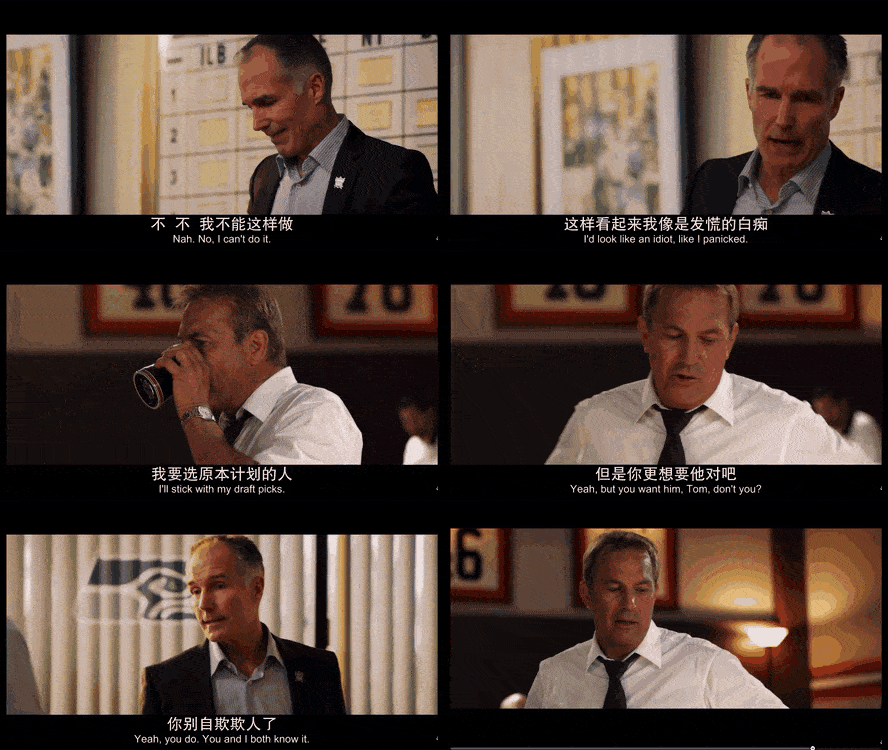
Draft Day is a movie perfectly suited for learning negotiation techniques.
1. Set Your Minimum Expectations: Establish your stop-loss point.
To avoid getting a result that exceeds your expectations after a negotiation, the first thing you need to do is “honestly assess your minimum expectations” — in other words, your bottom line. The biggest taboo in negotiation is starting without having set your minimum expectations. Therefore, try asking at the right moment during a negotiation: “What do you want to do?” to probe the other party’s bottom line. (Sometimes, asking in Taiwanese Hokkien produces unexpected results, but that’s another story.)

Silicon Valley S2E9: Ask the other party “What should we do?” to probe their thinking.
If you ask this and the other party doesn’t give a straight answer, dodges the question, or doesn’t even know what to say, that’s your best opportunity to go on the offensive. When you discover your opponent has come to the battlefield without a weapon, or gone to the bathroom without toilet paper — what are you waiting for?
To avoid appearing indecisive, set your minimum expectations to be simple enough, quantifiable, and not self-compromising. It must be easy and clear enough for you to remember, and it must not violate your own will — otherwise you’ll end up like the singer Chi Chin (singing about endless compromise).

Silicon Valley S3E5: Keep your minimum expectations as simple as possible, and maintain a firm attitude.
2. Be Ready to Walk Away: The person who’s willing to not play holds the most power.
Here’s a question: “Between a boss and a subordinate, who holds more power?” The answer is: “The one willing to quit.” The best negotiation weapon is actually having the ability to walk away from the table at any moment. When the other party’s offer falls below your minimum expectations, you can turn around and leave without hesitation. Remember, a negotiation where you don’t dare to walk away is called “begging.” If you can’t afford the consequences of walking away, don’t sit down at the negotiation table — or at the very least, don’t let your opponent see that.

Silicon Valley S2E9: The best negotiation weapon is being able to walk away from the table at any time.
As Jay Chou sang to Lara: “Turn around and leave, with words left unspoken.” When you’re truly about to leave but the other party still has something to say — that’s your best moment to press the advantage. The benefit of being prepared to walk away is that it helps you deliver a decisive blow at critical moments during the negotiation. Mastering the timing of your exit will help bring the negotiation to a swift conclusion.

Draft Day: When you notice the other party is hesitating, you can use the threat of walking away to pressure them into compliance.
3. Establish Equal Standing: Let your body language create the right atmosphere.
Compared to the other five points, using body language to create atmosphere is actually the most practical technique for everyday use.
In social psychology, it’s been shown that mirroring the other person’s posture not only effectively increases likability but also creates a sense that both parties are engaged in a conversation on equal footing. Think about it: when you see someone standing and talking to another person who is seated in a meeting room, you naturally assume the standing person is lecturing the seated one. This is because differences in posture cause subconscious shifts that affect how smoothly both parties communicate. Therefore, if you want to keep the atmosphere pleasant and communication flowing during a negotiation, “moderately” mirroring the other person’s posture is a very important technique. (“Moderately” means don’t let them notice you’re doing it.)
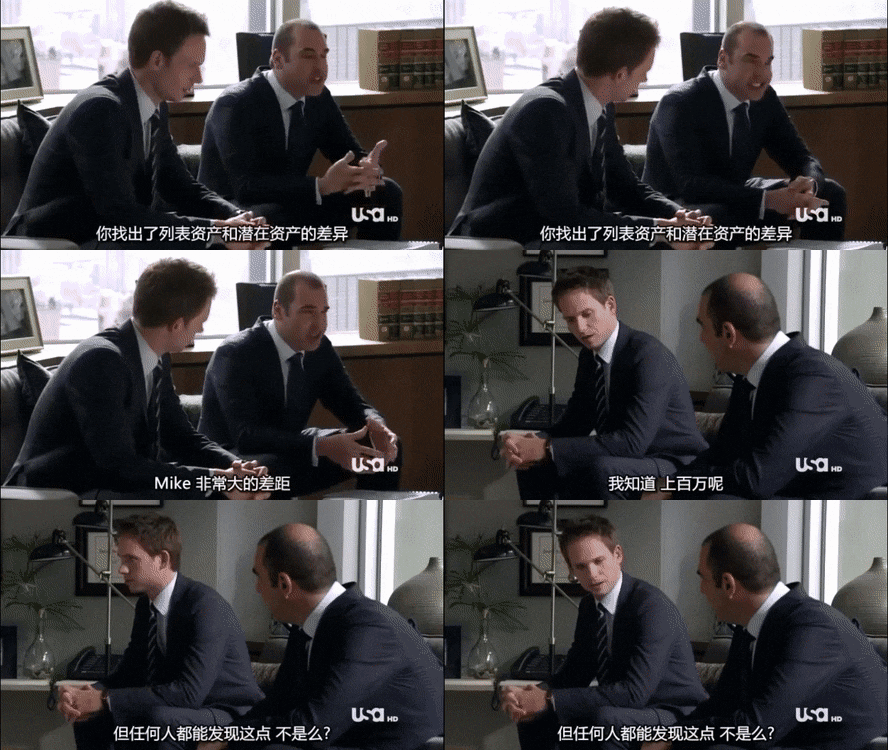
Suits S1E2: “Moderately” mirroring the other person’s posture can effectively close the distance between you.
Of course, we can also use body posture to create an information asymmetry during negotiations, generating the atmosphere we want. For example, when launching an emotional appeal, lean your body slightly forward to make the other person feel you’re trying to share something heartfelt. Or you can spread your hands wide on the table, making your body appear larger while slowing your speech, to give the impression that you’re about to say something important. In short, body language helps us create various atmospheres, and negotiators who skillfully use these atmospheres can more easily achieve their goals.

Silicon Valley S3E5: When you’re making a key point, lean your body slightly forward. (But please don’t fall over.)
4. Think from Their Perspective: How to scratch where it really itches.
Negotiation requires at least two people, so it’s definitely not your personal monologue — you must spend a great deal of time thinking from the other party’s perspective. A good negotiator never says “this is for my benefit,” but rather pretends “this is all for your benefit.” You must launch your offensive from the other party’s standpoint to effectively push the negotiation where you want it to go. There’s a Chinese saying: “There’s a kind of cold where your mom thinks you’re cold.” The biggest taboo in negotiation is not understanding the other party well enough, yet pretending you’re thinking on their behalf — that’s the fastest way to blow a negotiation.
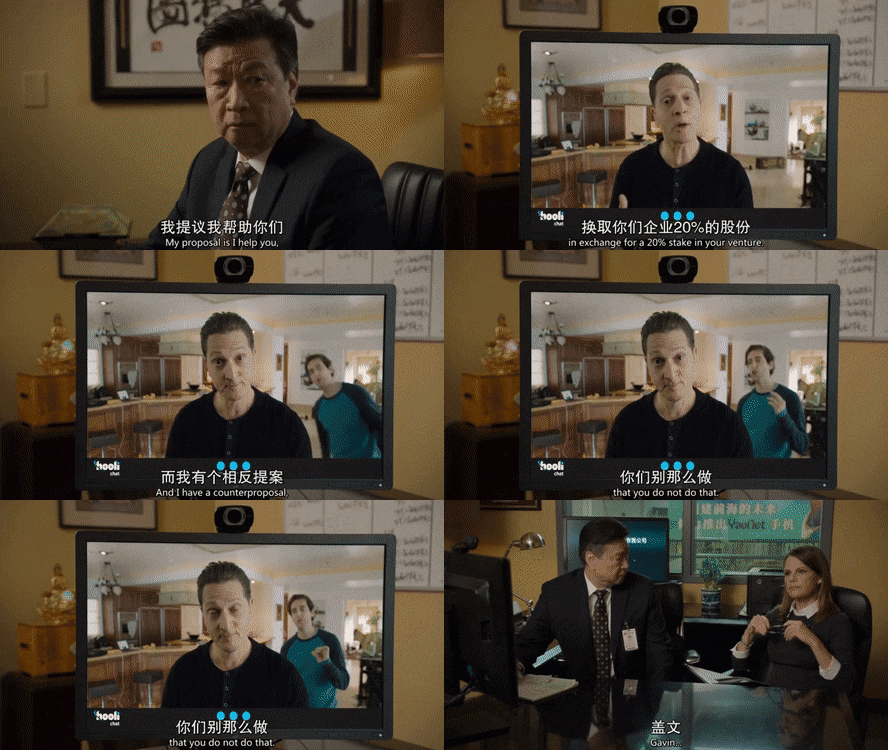
Silicon Valley S5E8: Every exchange comes at a cost — you can’t only think about yourself.
So how do we truly understand the other party? Besides collecting extensive information and running scenarios beforehand, the negotiation itself is actually the best opportunity. A good negotiator spends roughly 90% of their time listening to what the other party wants, then uses the remaining 10% to tell them: “Here’s why you need my proposal.” Usually, when you say something that truly scratches where it itches, the other party will have a noticeable reaction and pause. When you spot this reaction, you’ve found their real itch.
When it itches, help them scratch it!
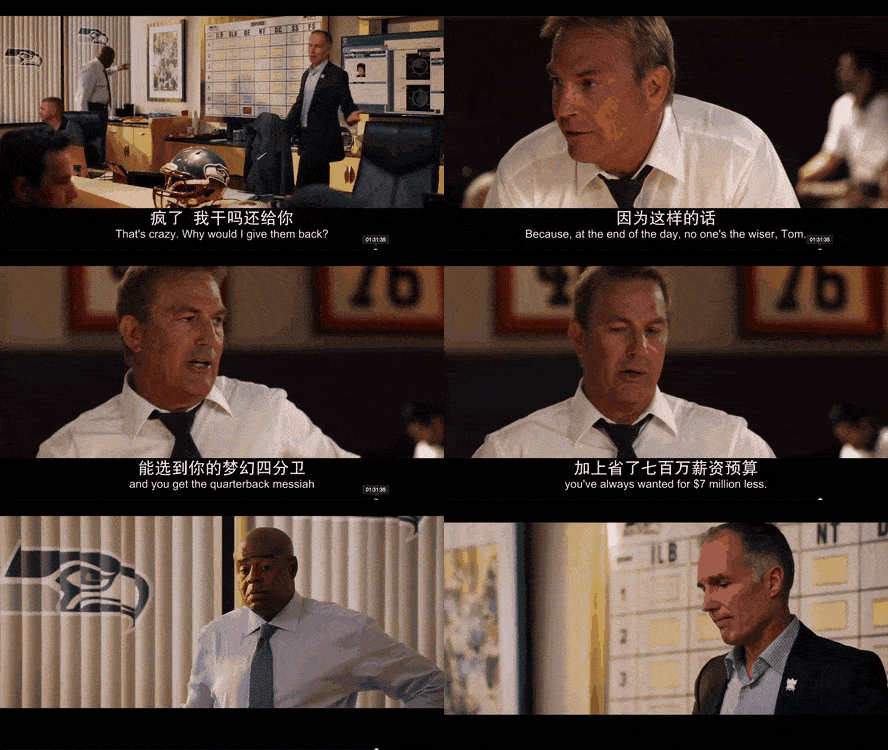
Draft Day: When you hit a nerve, the other party will pause momentarily.
5. Leverage Environmental Conditions: Use surrounding elements to create a favorable atmosphere.
When the negotiation has progressed to a certain point, using the surrounding environment to create some atmosphere at the right moment can actually help persuade the other party. In most negotiations where you control the pace, “time pressure” is a very useful weapon, particularly when the other party needs something from you. If you’ve finished all the communication but the other party still seems hesitant, imposing a time limit will help them accept the conditions you’ve proposed. (Just like how you know perfectly well that online shopping discounts claim to be “last day only” every single day, yet you still shamelessly buy something every day.)

Moneyball: Setting a time limit for decisions is a great way to effectively push the other party to accept.
Environmental psychology has proven that people are easily influenced by their surroundings. For example, many companies deliberately turn the air conditioning down too cold during interviews, or in business negotiations, they intentionally sit with their back to the window so visitors can’t see their expressions clearly. I’ve personally experienced a client who served hot tea on a scorching day, trying to make me too hot to drink water and too thirsty to speak. In sports, there’s what’s known as “home court advantage.” When negotiating in your own office or home, you can make good use of surrounding objects — it’s an extremely effective technique. (For example: a hammer, a chainsaw, or a watermelon cleaver… just kidding.)

Suits S1E1: Using surrounding objects to help persuade the other party is the home team’s advantage.
6. Prepare Your Final Strike: The move that helps you reach your goal.
In English, there’s a term called “Final Offer.” It’s typically saved for the very last moment to present to the other party, carrying the force of “take it or leave it.” Here, we call it the final strike. Once you deliver this blow, it should be a yes-or-no proposition with no turning back. Therefore, never throw out your Final Offer at the very beginning of a negotiation. If you’ve already settled things and then change them again, it will greatly diminish your bargaining power.

Silicon Valley S1E3: After your final strike succeeds, you’d better not casually change things again!
The right moment for the final strike is when the entire negotiation has progressed about 95%, or when it’s already under your control and you’re ready to lock down the conclusion. Think of a 30-minute job interview — it’s the last 5 minutes that are the crucial deciding factor for salary and hiring. Once you’ve delivered your final strike, don’t hesitate — end the negotiation as quickly as possible.
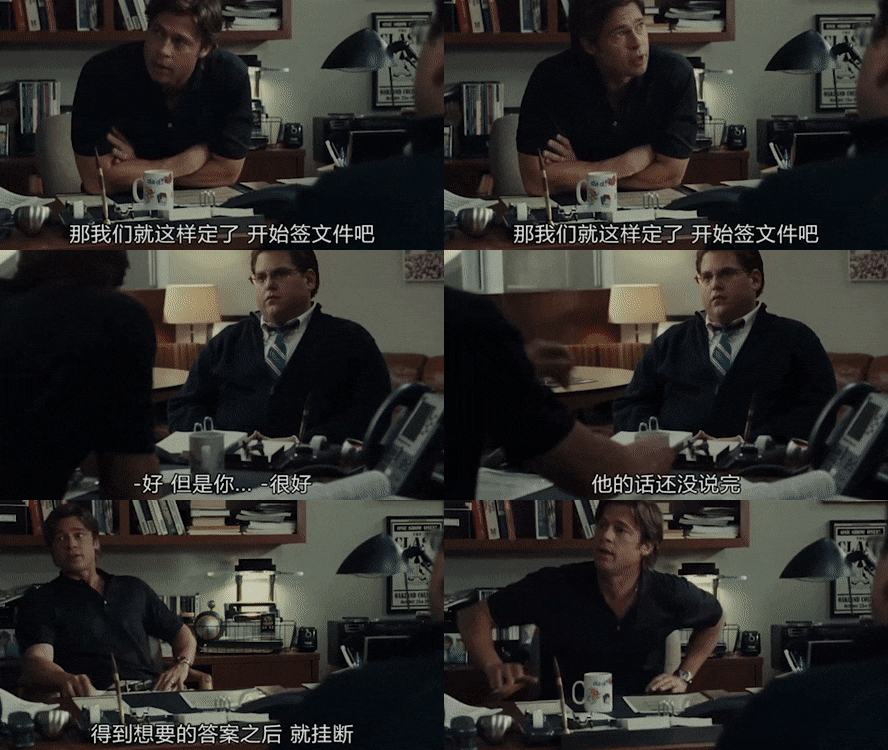
Moneyball: Once you get the answer you want, hang up immediately.
How to set up your final strike is actually a deep art. In short: If the negotiation has been going badly for you the entire way, set your final strike at your minimum expectations. If it’s been going back and forth, set your final strike at the current terms. If you’ve held the upper hand throughout the entire negotiation, try pushing your final strike toward the high end.

Draft Day: A smart negotiator sizes up the current situation and presents their Final Offer accordingly.
Beyond these six points, the most important thing in negotiation is actually having chips to bargain with, along with a firm grasp of reality. A negotiation without chips is called “begging”; a negotiation conducted without understanding the real situation is called “daydreaming.” Setting aside these two fundamental shortcomings, everything else is within our power to improve. Next time you’re negotiating, arguing, or discussing with someone, try these six techniques.
*The author is not a psychology or negotiation professional — this is purely a personal interpretation illustrated through favorite TV shows and movies.